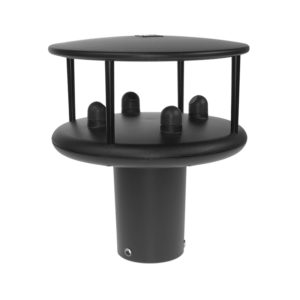
WindSonic Metal
2-Axis Ultrasonic Anemometers
WindSonic M ultrasonic anemometers are compact, rugged and maintenance free. With an impact resistant, corrosion-free, hard anodized aluminum alloy housing and optional heating system this wind sensor is recommended for use in harsh environmental conditions.
WindSonic M ultrasonic anemometers provide high quality measurements up to 60 m/s (134 mph). There are no moving parts, offering maintenance-free operation in a wide range of applications. With an impact resistant, corrosion-free, hard anodized aluminum alloy housing and optional heating system this wind sensor is recommended for use in harsh environmental conditions.
An optional heating system is available for colder climates where power is available. The heaters extend the operating range, and serve to reduce frost and snow accumulation. Heater power is controlled by internal temperature sensing devices and cannot be disabled except by removing the heater supply. When operated from a 12 volt supply, the heaters produce 26 watts maximum. If operated from a 24 volt supply, maximum heater output is 100 watts. WindSonic M is not recommended in areas with freezing rain if uninterrupted service is required. Select a WindObserver with heating or enhanced heating in areas with freezing rain.
WindSonic M sensors provide speed and direction measurements in a variety of output options:
- Option 2: RS232, RS422, RS485 (2-wire), ASCII, NMEA 0183
- Option 3: RS232, RS422, RS485 (2-wire), ASCII, NMEA 0183, Analog (voltage or current)
The sensors are programmable via the RS232 connection. Request programming service at the time of order, or re-configure the sensor on your own via a terminal program any time the default settings need to be adjusted.
Each sensor includes a connector kit that must be assembled to a cable in order to connect to the sensor. Cable is not included. Make your installation easy by ordering cable and cable assembly from NovaLynx. The instruction manual and display software are available as free downloads.